
Make the Most of a Small Bathroom: Smart Design with Expert Plumbing & Electrical Work
Small bathrooms feel bigger when every choice is intentional. This guide covers simple design upgrades and smart plumbing and electrical solutions that free up floor space, improve accessibility, and reduce clutter — all while staying code-compliant. Learn how compact fixtures, smart layouts, and wall-mounted systems come together with support from All Service Specialists.
Best Space-Saving Strategies for Small Bathroom Remodels
Maximizing space comes down to good planning, compact fixtures, and keeping sightlines open. The goal is to clear the floor, use wall cavities efficiently, and bring in more light so the room feels larger and easier to move around in.
High-impact ideas include:
- Wall-mounted toilets and floating vanities to open floor space
- Recessed storage like medicine cabinets and shower niches
- Glass shower enclosures to keep the room visually open
- Pocket or sliding doors to remove door-swing issues
- Compact fixtures such as narrow vanities and linear drains
- Layered lighting and mirrors to brighten and expand the space
Understanding which upgrades require plumbing, electrical, or framing work helps you plan realistically and avoid surprises during your remodel.
Which Compact Bathroom Fixtures Save the Most Space?
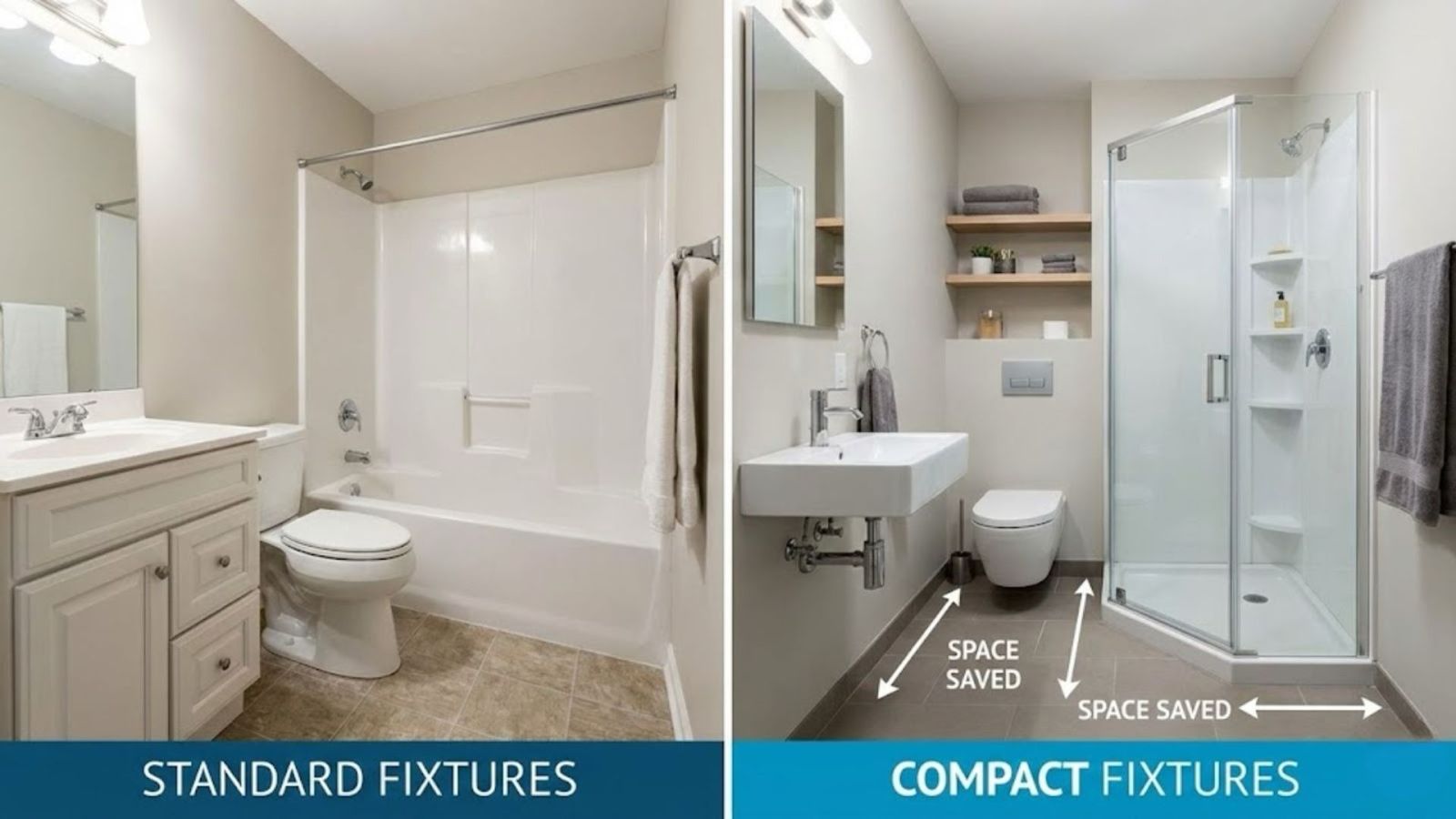 Compact fixtures make small bathrooms feel larger by opening floor space and reducing visual clutter. Floating vanities and wall-hung toilets lift fixtures off the ground for a cleaner, more open look, while corner sinks and narrow vanities help maintain clearance in tight areas. These fixtures typically run 12–16 inches deep and sometimes require reinforced framing or adjusted plumbing, so selecting them early and coordinating with your designer and plumber is important.
How Layout and Design Make a Tiny Bathroom Feel Bigger
A small bathroom looks larger when sightlines are clear and surfaces feel continuous. Glass showers, seamless flooring, and larger tiles reduce visual breaks, while light colors, mirrors, and vertical tile patterns add brightness and depth. Smart layouts — like placing the shower at the far end or keeping fixtures along one wall — improve circulation and make the space feel more open.
How Plumbing Innovations Create More Usable Space
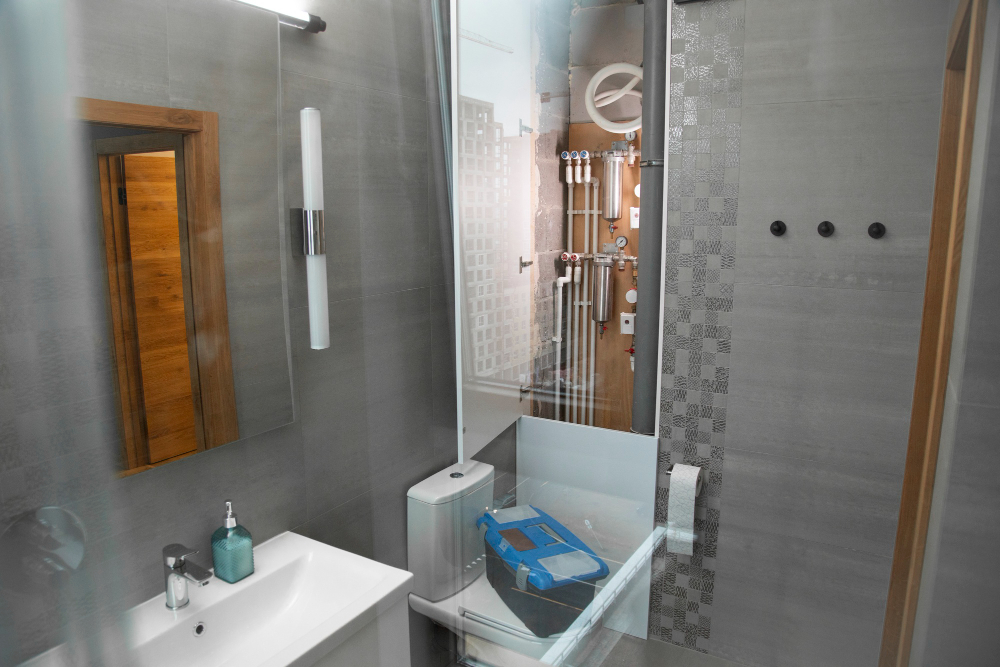
Modern plumbing solutions allow compact fixtures to work effectively. In-wall carriers support wall-mounted toilets and sinks, low-profile shower pans with linear drains reduce thresholds, and rerouted supply lines make recessed medicine cabinets possible. These methods free floor space, slim down fixture profiles, and create room for built-in niches. Here’s a quick look at how common fixtures impact plumbing:
| Fixture Type | Plumbing Requirement | Installation Notes |
|---|---|---|
| Wall-mounted toilet | In-wall carrier, concealed tank, aligned drain | Needs strong wall backing and an access panel |
| Floating vanity | Wall drain connection | May require drain pitch adjustments |
| Corner sink | Short supply lines and P-trap placement | Works well in tight routing situations |
| Low-profile shower base | Linear drain slope and possible subfloor work | Lower threshold; requires careful waterproofing |
Understanding these requirements helps you plan realistically and avoid mid-project changes.
Electrical Designs That Make a Small Bathroom Feel Open
Electrical planning shapes how bright, functional, and spacious a bathroom feels. Recessed lighting removes bulky fixtures, layered lighting brightens corners, and smart controls add flexibility without extra wall switches. Heated floors add comfort without taking wall space. Always plan circuit loads, outlet placement, and fixture locations together so they don’t interfere with plumbing or cabinetry. Here’s a quick summary:
| Electrical Element | Requirement | Benefit |
|---|---|---|
| Recessed lighting | May need dedicated circuits | Clears visual clutter and brightens the room |
| Heated floors | Dedicated circuit + thermostat | Adds comfort without bulky heaters |
| Smart mirrors/lighting | Low-voltage wiring or outlet | Integrated lighting and customizable settings |
| GFCI outlets | Required near water | Safety and code compliance |
How Recessed Lighting Opens Up a Small Bathroom
Recessed lights eliminate visual obstacles and distribute light evenly, making ceilings feel higher and the room feel larger. They’re ideal for task areas like vanities and showers, and they prevent harsh shadows that make tight rooms feel closed in. For remodels, check ceiling depth and insulation to ensure housings or slim LED modules fit safely. Pairing recessed lighting with mirrors and light finishes maximizes brightness and perceived space. 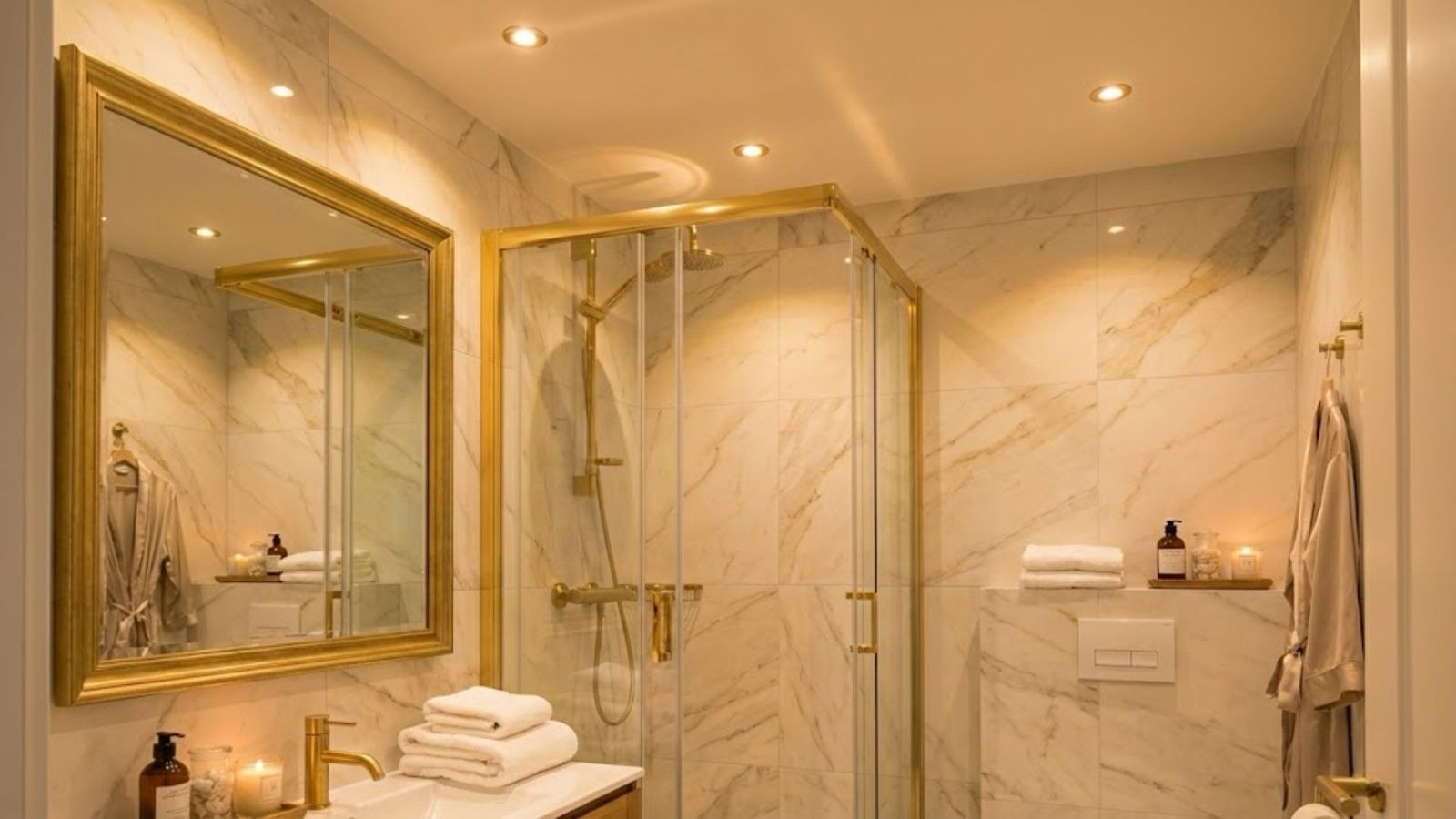 Recessed lighting removes bulky fixtures, providing even illumination and making ceilings feel higher. Place fixtures to light task zones (vanity, shower) to eliminate shadows. Choose lumen levels and color temperatures for bright, natural light and flattering reflections. Retrofits require checking ceiling depth; new builds can plan for IC-rated cans or thin LED modules. Coordinate electrical planning with fixture selection to enhance perceived space without conflicting with plumbing or ventilation. Smart controls and mirror placement further amplify depth.
Accessible Bathroom Products for Tight Spaces
A range of accessible products fits small bathrooms: grab bars, accessible thresholds, door operators, manual closers, lever-style handles, anti-slip flooring, compact sinks and lavatories, toilet seat risers, towel dispensers, lever or blade faucets, mirrors, and prefab shower compartments and fixtures designed for tight footprints. When planning for both accessibility and space efficiency, it helps to know which compact products are available to meet both goals.
What Are the Advantages of Smart Lighting and Heated Floors in Compact Bathrooms?
Smart lighting allows scene switching without visible hardware, saving visual space and improving function (e.g., bright task lighting vs. warm ambient lighting). Heated floors offer discreet comfort, eliminating bulky wall heaters. Smart lighting needs low-voltage drivers or switched circuits; radiant floor systems require a dedicated circuit and thermostat. Planning these electrical loads early avoids costly rewiring. Combined, recessed lighting, smart controls, and radiant heat elevate comfort and perceived luxury in a small footprint.
Which Small Bathroom Layouts and Fixture Selections Maximize Usable Space?
Good layouts ensure clear circulation, reduce door interference, and place compact fixtures to maintain essential clearances. Efficient plans include single-wall layouts, corner-shower layouts, and wet-room concepts. Common fixture sizes—12–16 inch depth vanities, narrow-profile toilets, and 30-inch showers—balance storage and clearance. The table below compares layout types and recommended footprints.
| Layout Type | Typical Minimum Footprint | Recommended Fixtures / Notes |
|---|---|---|
| Linear (single wall) | 5′ x 8′ | Slim floating vanity, wall-mounted toilet, glass shower at the far end |
| Corner-shower plan | 4′ x 7′ | Curved or neo-angle corner shower, compact vanity, pocket door |
| Wet-room / curbless | 5′ x 8’+ | Low-profile linear drain, full waterproofing, open sightlines |
What Are the Best Layouts for Tiny Bathrooms to Maximize Functionality?
The best layout depends on room dimensions and plumbing stack location. Single-wall layouts minimize new plumbing runs. Corner-shower layouts reclaim central floor space. Wet-rooms create open, accessible shower areas. Each has trade-offs: single-wall plans limit fixture depth; corner showers may need custom glass; wet-rooms require thorough subfloor planning. Designers must confirm clearances (e.g., 30 inches in front of fixtures) and verify plumbing/electrical reroutes are accessible. Door type is the next big space-saving decision.
How Can All Service Specialists Help Madison, Wisconsin Homeowners Maximize Small Bathroom Space?
If you’re planning a compact bathroom remodel in Madison, Wisconsin, All Service Specialists combines remodeling know-how with plumbing and electrical expertise. We handle site evaluation, coordinate trades, and execute installations for wall-mounted fixtures, recessed niches, or radiant floors to perform reliably and meet code. By integrating both trades, we prevent mid-project changes and keep renovations on schedule. Contact us to discuss your layout, fixtures, and trade coordination needs.
What Plumbing and Electrical Services Are Offered for Compact Bathroom Remodels?
All Service Specialists provide services tailored to small-bath projects: plumbing reroutes, in-wall carrier installations, preparation for recessed niches, and electrical planning for recessed lighting, GFCI outlets, and heated floors. Our process includes inspection, a coordinated plan, tested installation, and a final walkthrough. Expect coordinated trade work so plumbing matches vanity depths and electrical supports lighting scenes and comfort features. This integrated approach reduces surprises and delivers the intended space-saving design.
How Do Madison, Wisconsin Building Codes Influence Small Bathroom Remodel Solutions?
Local codes and permit rules affect fixture choices, ventilation, and outlet placement. Electrical rules require GFCI-protected outlets and set clearances; ventilation rules may require mechanical exhaust. Permits and inspections affect timelines. Working with licensed plumbers and electricians familiar with Madison, Wisconsin rules ensures compliance, reduces rework risk, and improves inspection chances. Involve your contractor early to ensure space-saving ideas meet code.
What Are Common FAQs About Maximizing Space in Small Bathroom Remodels?
Homeowners often ask about balancing compact fixtures with maintenance, cost changes with trade work, and remodel timelines. Answers depend on clearances, retrofit complexity, and upgrade value. Below are practical responses to frequent questions:
- How should I evaluate fixture options for a small bathroom? Measure clearance and circulation, then compare fixture depths and plumbing support for the best balance of storage and usable space.
- Can I retrofit a wall-mounted toilet in an existing bathroom? Yes. Expect structural work for a carrier and possible drain realignment; complexity depends on wall depth and current stack location.
- How long does a compact bathroom remodel usually take? Timelines vary by scope. Projects with plumbing reroutes and electrical upgrades require multiple trade schedules and inspections, so plan for phased work and extra time for permitting.
How Do You Choose the Right Space-Efficient Bathroom Fixtures?
Picking fixtures starts with a checklist: measure floor area and door swing, verify plumbing stack and electrical panel capacity, and consider maintenance access. Factor in durability, ease of cleaning, retrofit complexity, and cost. Consult licensed plumbers and electricians for estimates on structural reinforcement or rerouting. This helps prioritize upgrades that return the most usable space for your investment.
What Are the Cost and Financing Options for Small Bathroom Remodels in Madison, Wisconsin?
Project costs vary with fixture quality, plumbing/electrical rerouting, permit fees, and finishes. Cost drivers include in-wall carrier systems, new drain configurations, custom glass, and radiant heating. Some projects qualify for financing; discuss terms with your project manager. Request a site-specific, itemized estimate. Compare multiple quotes and confirm each contractor’s plan for plumbing and electrical coordination to choose the best option.
- Measure first and prioritize changes that free circulation.
- Request itemized estimates separating plumbing, electrical, and finishes.
- Discuss financing early so scope and budget align.
Following these steps helps you move from concept to contract with confidence.
Conclusion
Small bathrooms can feel and function much larger with the right design and trade expertise. Space-saving fixtures, smart layouts, and coordinated plumbing and electrical work deliver real benefits: more floor, better circulation, and a cleaner look. Partnering with experienced professionals ensures your plan meets code and performs long term. Ready to transform your compact bathroom? Start with careful measurements, a prioritized fixture list, and a discussion with a licensed team to make the most of your space.